
Introduction
While hyperscalers race to stack thousands of GPUs to meet surging AI inference demand, Cerebras Systems is moving in the opposite direction. With the CS-4, announced on August 19, 2026, the California-based company is doubling down on a fundamentally different architecture: not a cluster of interconnected components, but three dinner-plate-sized silicon wafers, each fabricated as a single, monolithic processor.
The Wafer-Scale Architecture: A Bet on Physics
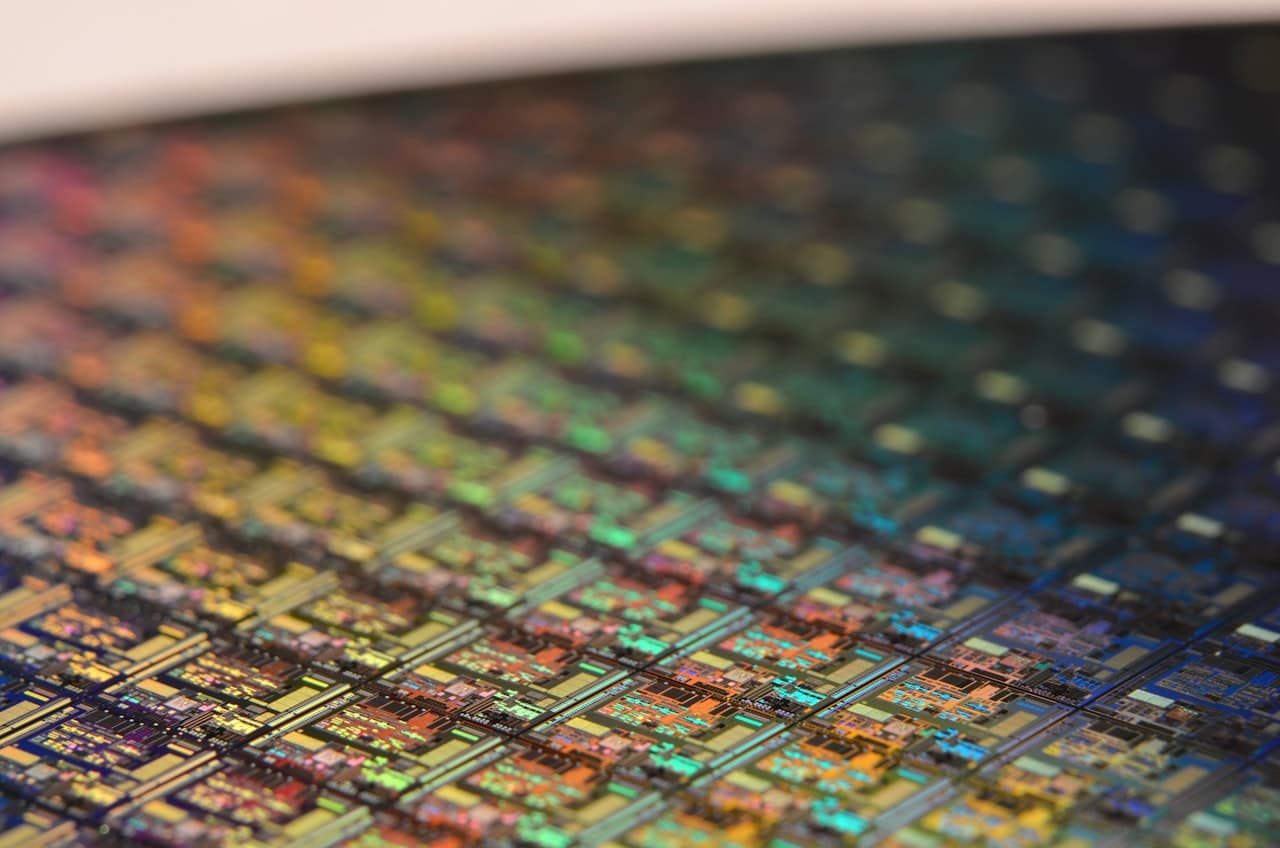
The CS-4 is built around three instances of the Wafer Scale Engine 3 Turbo (WSE-3T). Each chip covers 46,225 mm² of silicon — roughly fifty times the surface area of a high-end GPU — integrating 900,000 AI-optimized cores and 4 trillion transistors per component.
This architectural choice is more than an engineering milestone: it addresses a fundamental constraint. In a conventional GPU cluster, a growing share of bandwidth and energy is consumed not by computation itself, but by shuttling data between discrete components. The wafer-scale approach largely eliminates that bottleneck: 44 GB of SRAM is embedded directly within each wafer, with wafer-to-wafer latency dropping to 2 microseconds on the new rack platform, dubbed Nexus.
Numbers That Redefine Scale
The full CS-4 system delivers 750 petaflops of AI compute, 129.6 petabytes per second of memory bandwidth, and 7.2 terabits per second of I/O throughput. Cerebras claims up to 30x more tokens generated per second per user compared to equivalent GPU solutions, and energy efficiency ten times greater than the CS-3. The system is designed to handle models exceeding 50 trillion parameters.
For infrastructure teams, another metric stands out: the Nexus platform cuts the number of components to deploy by half and compresses installation time from several days to just a few hours, thanks to a modular design that consolidates high-density power, cooling, and system control within a single chassis.
A Fork in Accelerator Design
What the CS-4 represents goes beyond benchmark gains. It signals a structural divergence in accelerator strategy: on one side, the horizontal scalability model championed by GPUs — add more units, improve interconnects; on the other, the monolithic density approach — pack more compute onto a continuous silicon surface, eliminating the overhead of multi-chip designs.
Cerebras has also forged a partnership with AMD around a disaggregated inference architecture: AMD Helios handles the Prefill phase while the CS-4 manages Decode. The combined throughput gain claimed reaches five times that of a single-vendor solution, opening the door to hybrid data center configurations that were previously out of reach.
Commercial deliveries are expected this quarter (Q3 2026), which will soon put these performance claims against real production workloads.
What This Means for CIOs
The CS-4 is less a universal answer than a market signal. Competition in the accelerator space is no longer fought solely on raw FLOPS: memory latency, compute density per rack, and total energy consumption are becoming decisive procurement criteria. The fact that a single platform posts material gains across all three dimensions simultaneously is a compelling reason to revisit inference architectures planned for 2027 — before the next hardware refresh cycle locks in infrastructure commitments for years to come.