
Introduction
For years, the networking challenge in AI infrastructure came down to one thing: connecting GPUs to each other as fast as possible within the datacenter. The hyperscalers' enormous investments in InfiniBand and high-speed Ethernet fabrics running at 400G or 800G reflect this "scale-out" mindset. But a quieter, and arguably more consequential, challenge is emerging for every organization deploying inference workloads: the geographic distribution of AI compute, and the WAN infrastructure it demands. It was precisely this frontier that Arista Networks chose to address with its announcements at SC26 on November 17, 2026.
From GPU Farm to the Edge: A Topology Shift
Centralizing AI inference in a handful of large datacenters produced a relatively clean architecture: hyper-connected GPU clusters, a well-defined network perimeter, and latencies that most applications could tolerate. The rise of autonomous AI agents complicates that picture significantly.
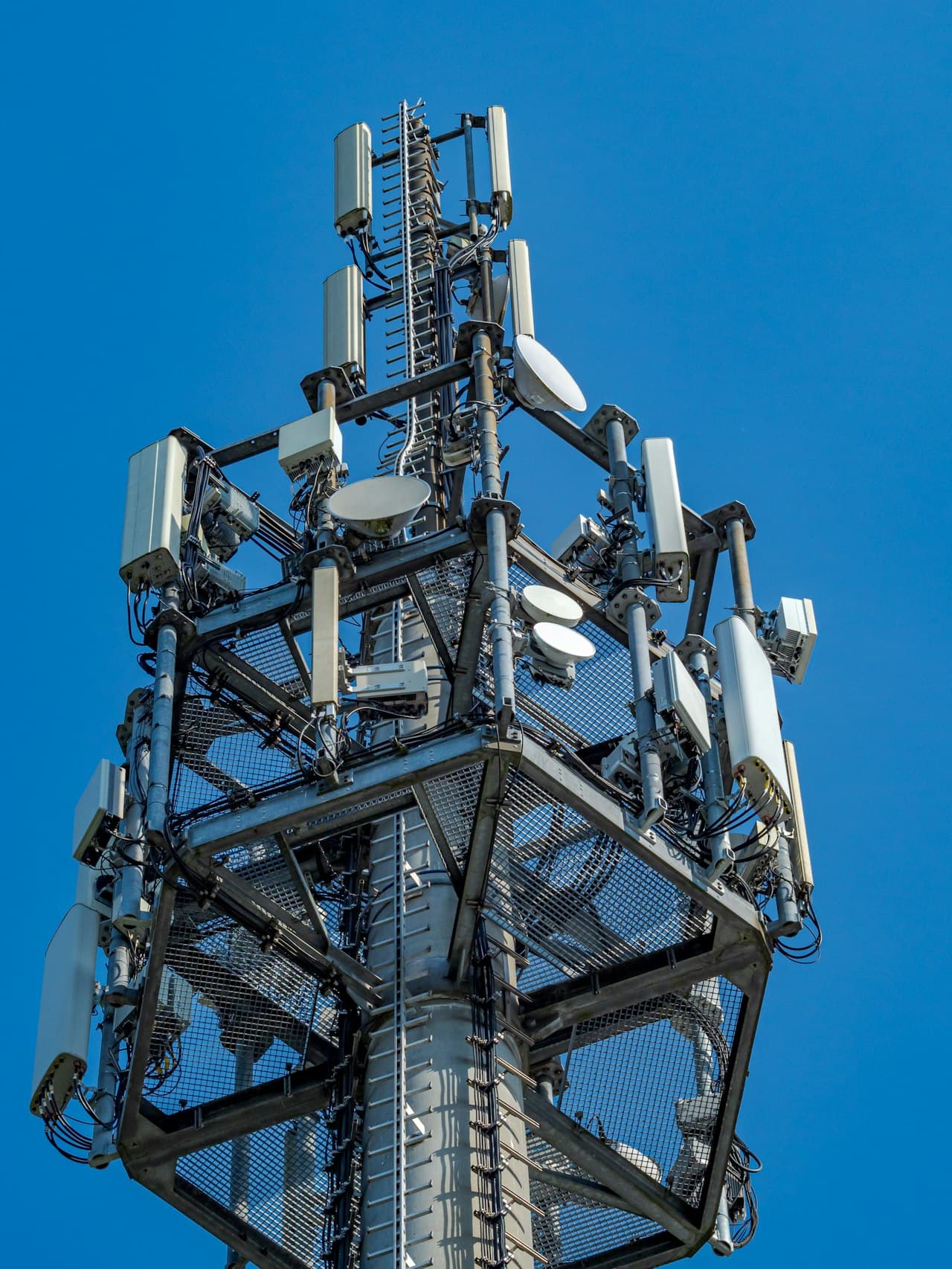
An agent that chains multiple model calls, to reason, query external tools, and generate a response, accumulates transit time at every step. When those exchanges route through a distant datacenter, milliseconds stack up and degrade real-time performance. The natural response is to push inference compute closer to end users: branch offices, regional points of presence, infrastructure co-located with 5G antenna sites. Layered on top of this is the growing weight of data sovereignty requirements, which in several jurisdictions mandate that data remain within defined geographic boundaries.
This dispersion shifts the network constraint. It is no longer just about internal datacenter bandwidth, it is about the quality, reliability, and consistency of transport between inference nodes.
Arista's SC26 Announcements
The Etherlink R4 family comprises four platforms, each targeting a specific layer of this distributed topology. The 7020R4 and 7020HR4 are compact 1 RU access routers supporting ports from 25G to 400G. The HR4 variant is thermally hardened for outdoor deployments, including sites adjacent to 5G infrastructure, with availability expected in early 2027; the 7020R4 is available now.
The 7282R4 targets core and edge nodes with dual redundant supervisors, designed to keep the control plane available at critical peering points. The 7280R4, the flagship long-haul transport platform, is rated by Arista at 25.6 Tbps with 64 x 400G ports, half of which support ZR/ZR+ coherent optics for inter-site links.
Arista claims up to 60% lower power consumption compared to competing platforms built on 7 nm and 16 nm silicon. The platforms natively integrate wire-rate MACsec and IPsec, SRv6 segment routing, and precision network timing, built in by design, not bolted on through software overlays.
A Market Coalescing Around "Scale-Across"
The convergence of carrier networks, edge computing, and AI infrastructure is creating a segment that vendors are beginning to call "scale-across", as distinct from the "scale-out" world of GPU clusters. Arista says this segment now represents approximately 30% of its AI infrastructure business, with a global market opportunity it estimates at between three and four billion dollars.
For CIOs and infrastructure leaders, the signal is unambiguous: the next wave of inference projects will not be limited to provisioning GPUs and datacenter bandwidth. They will require deliberate decisions about inter-site transport topology, consistent routing policy across multi-vendor estates, and end-to-end latency control in distributed architectures. Telecom operators and enterprise network integrators have a clear window to establish their expertise in this space, distributed AI inference is no longer a research hypothesis. It is already being deployed.